




Dussehra Rangoli Designs 2026: Easy and Simple Ideas for Your Doorstep
Simple Dussehra rangoli ideas for 2026 — bow and arrow, diya, flower and peacock designs, with easy steps for beginners.

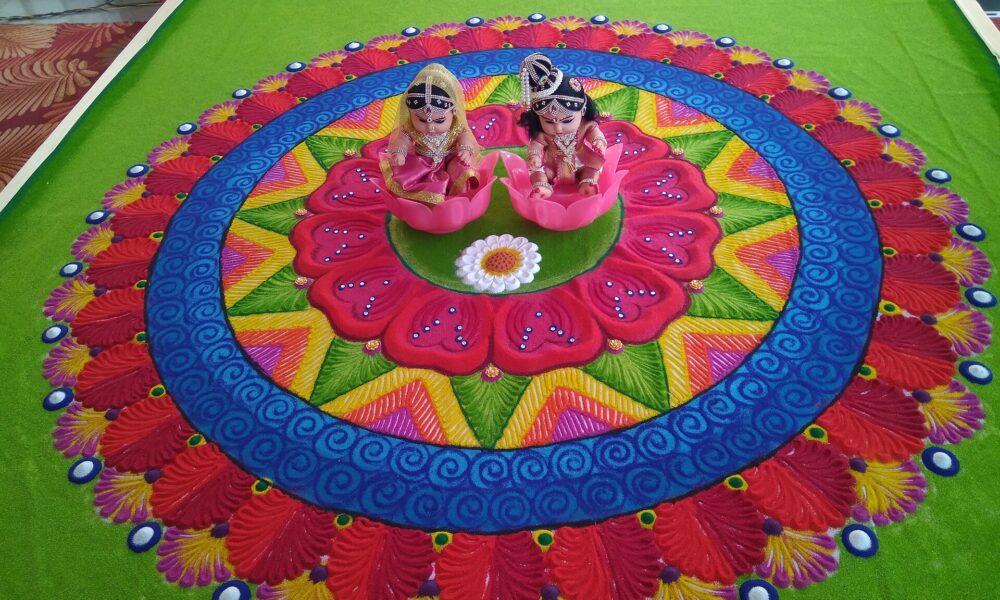
Dussehra falls on Tuesday, 20 October 2026. A rangoli at the door is one of the easiest ways to welcome the festival. Here are simple design ideas, from a five-minute diya to a full peacock, with tips that work even if you have never made one before.
Table Of Content
- What You Need
- 1. Bow and Arrow Rangoli
- 2. Diya Rangoli
- 3. Flower Rangoli
- 4. Peacock Rangoli
- 5. Ravana Rangoli
- 6. Kolam and Dot Rangoli
- Rangoli Tips for Beginners
- Frequently Asked Questions
- What rangoli should I make for Dussehra?
- What colours are used for Dussehra rangoli?
- How can I make a rangoli without powder?
For the festival’s date, muhurat and story, see our Dussehra 2026 guide. Prefer paper to the floor? Try our easy Dussehra drawing ideas.
What You Need
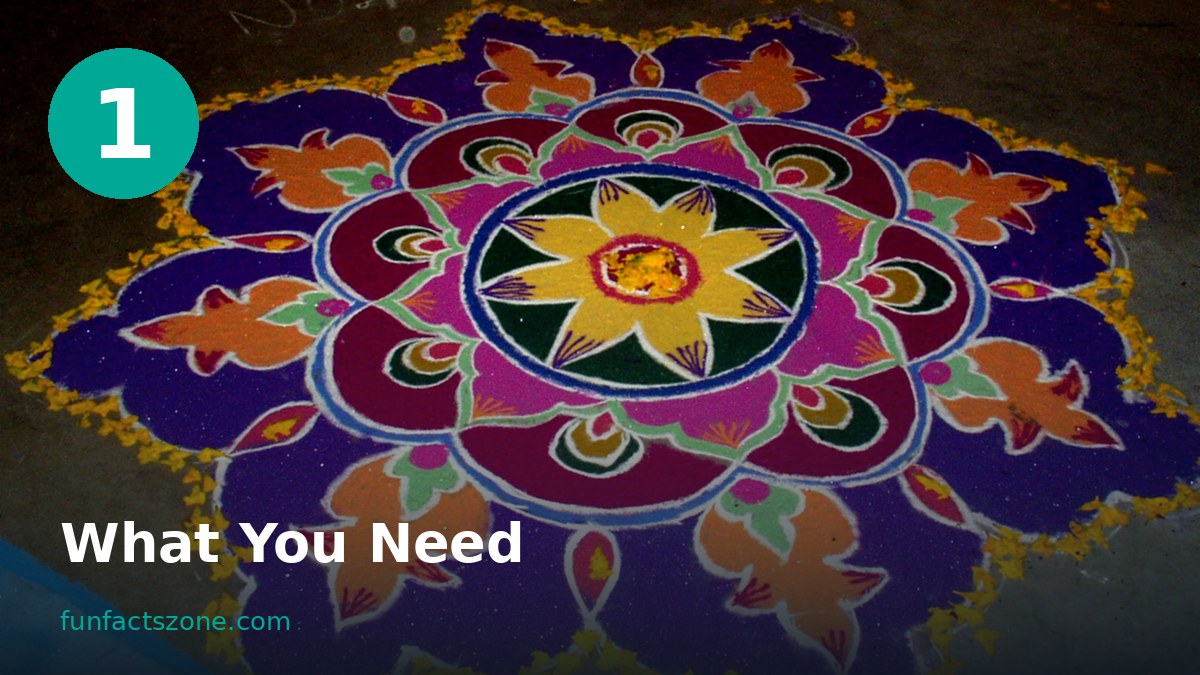
Rangoli powder in 4–6 colours. Red, yellow, orange, green and white are the Dussehra favourites.
Chalk to draw the outline first.
A small cup, bangle or plate to trace perfect circles.
Diyas and flowers (marigolds, rose petals) to finish the design.
Tip: sweep and slightly dampen the floor first. The powder grips better and the lines stay sharp.
1. Bow and Arrow Rangoli
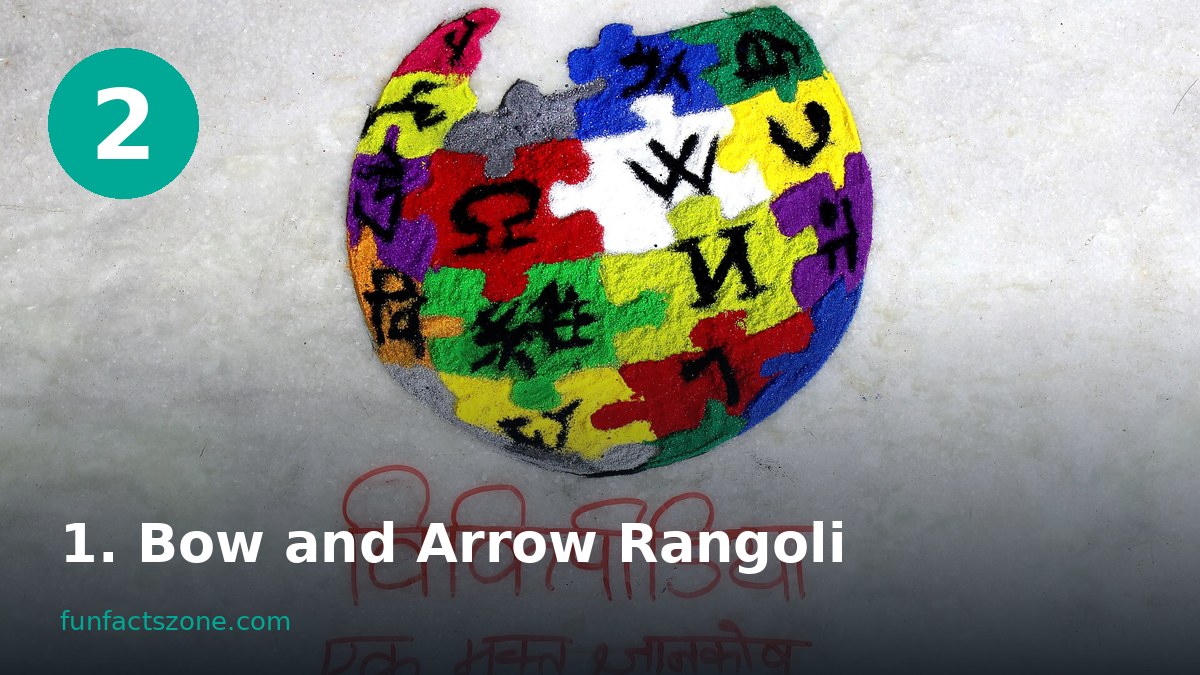
The bow and arrow is Rama’s symbol and the easiest Dussehra-only design.
Draw a large curve (the bow) with chalk and join its ends with a straight line (the string). Draw a long arrow across the middle. Fill the bow with orange or yellow, the arrow with red, and add a white border. Put a small diya at the arrow tip.
2. Diya Rangoli
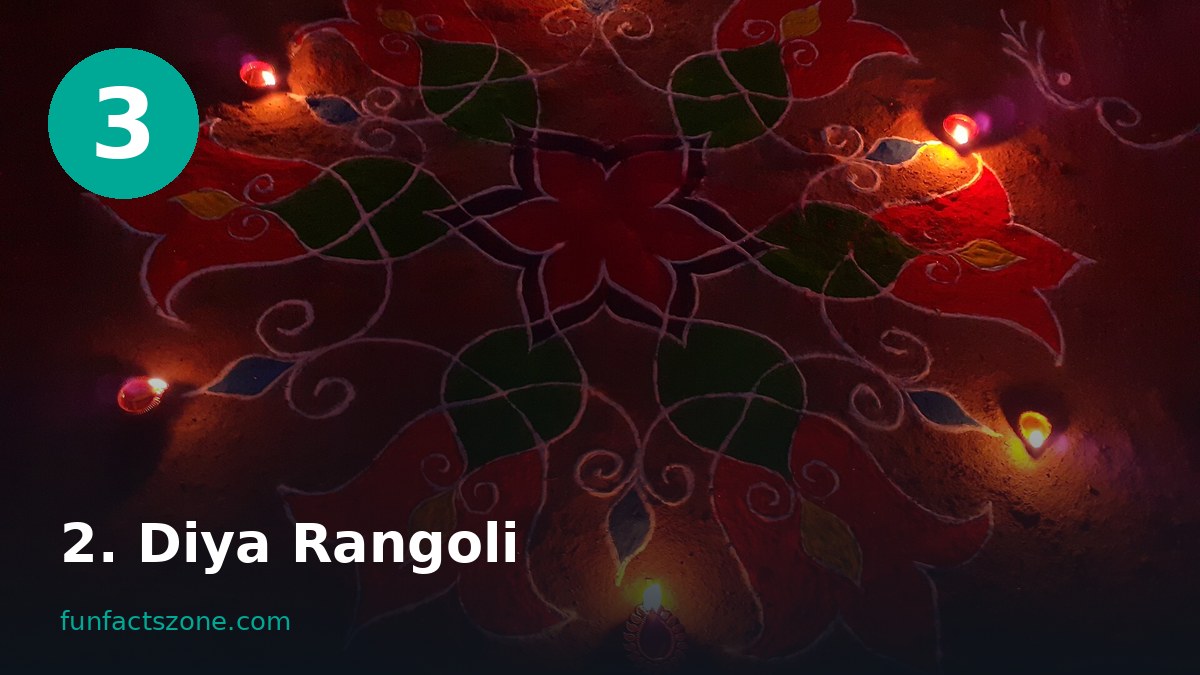
A diya rangoli takes five minutes. Draw a half-circle for the lamp and a teardrop flame above it. Fill the lamp with orange and the flame with yellow and red. Circle it with dots and place real diyas around the edge in the evening.
3. Flower Rangoli
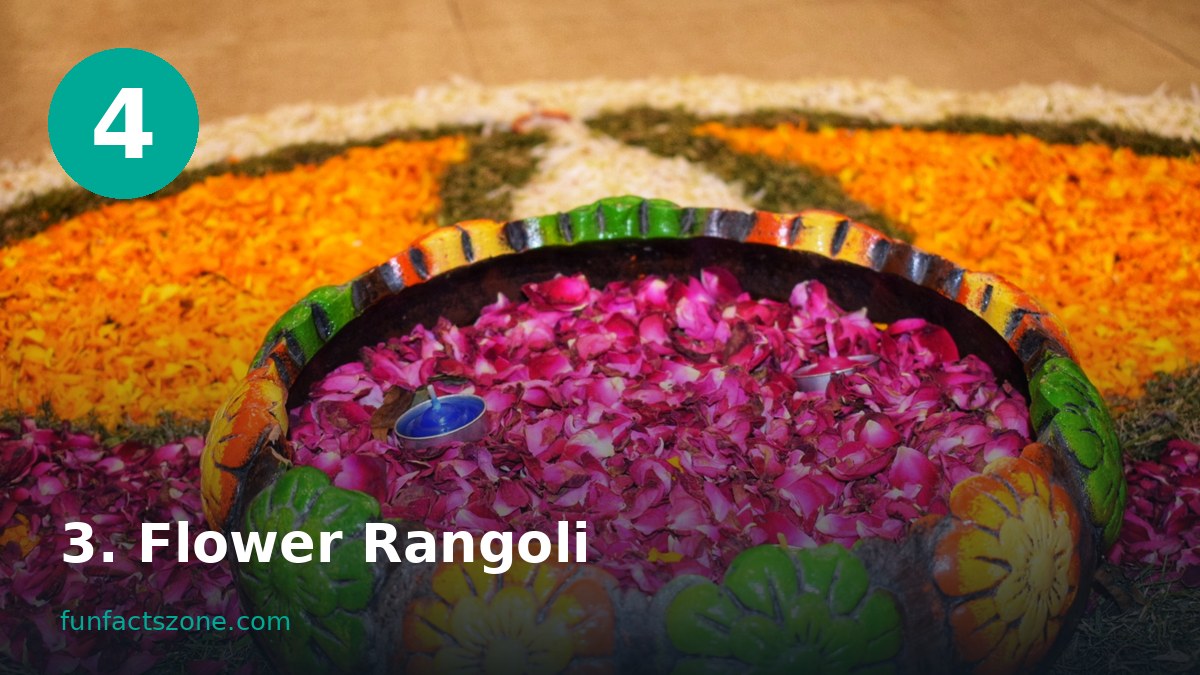
No powder? Use flowers. Make a circle of marigold petals, then an inner ring of rose petals and a centre of white chrysanthemums or jasmine. Flower rangolis look fresh all day and are easy to sweep up.
4. Peacock Rangoli
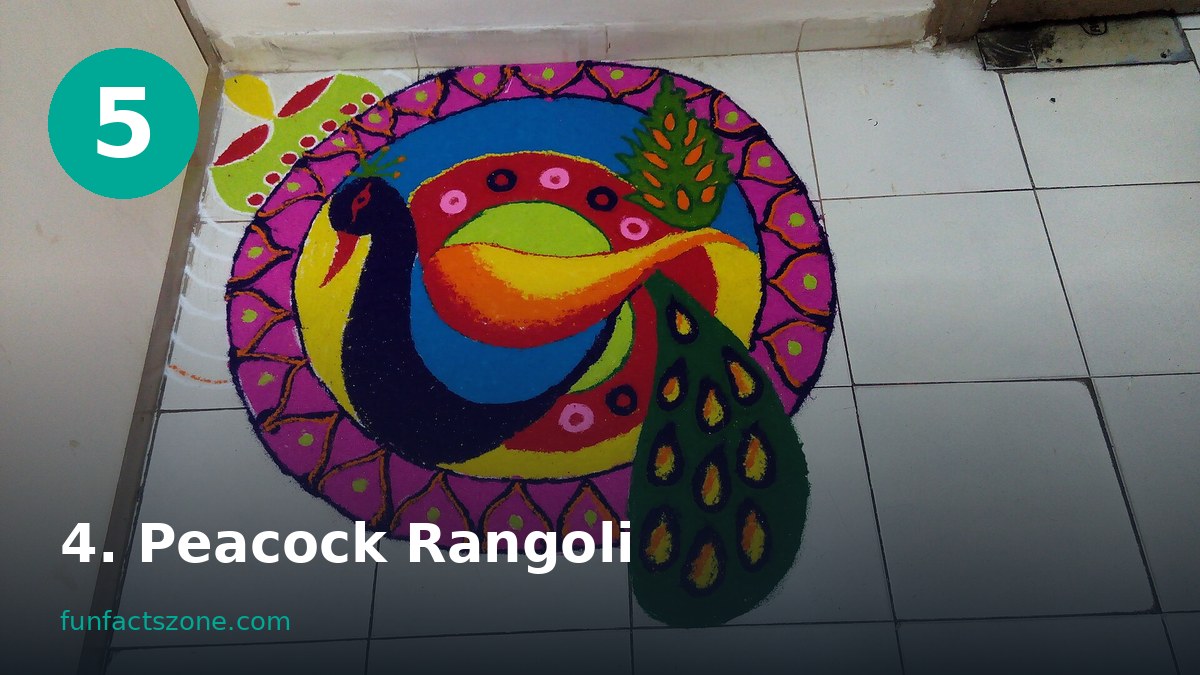
For a bigger doorstep. Draw the peacock’s body as a curved “S”, then fan out five to seven feathers behind it. Fill with blue, green and a touch of gold, and add an “eye” of dark blue and yellow at the tip of each feather.
5. Ravana Rangoli
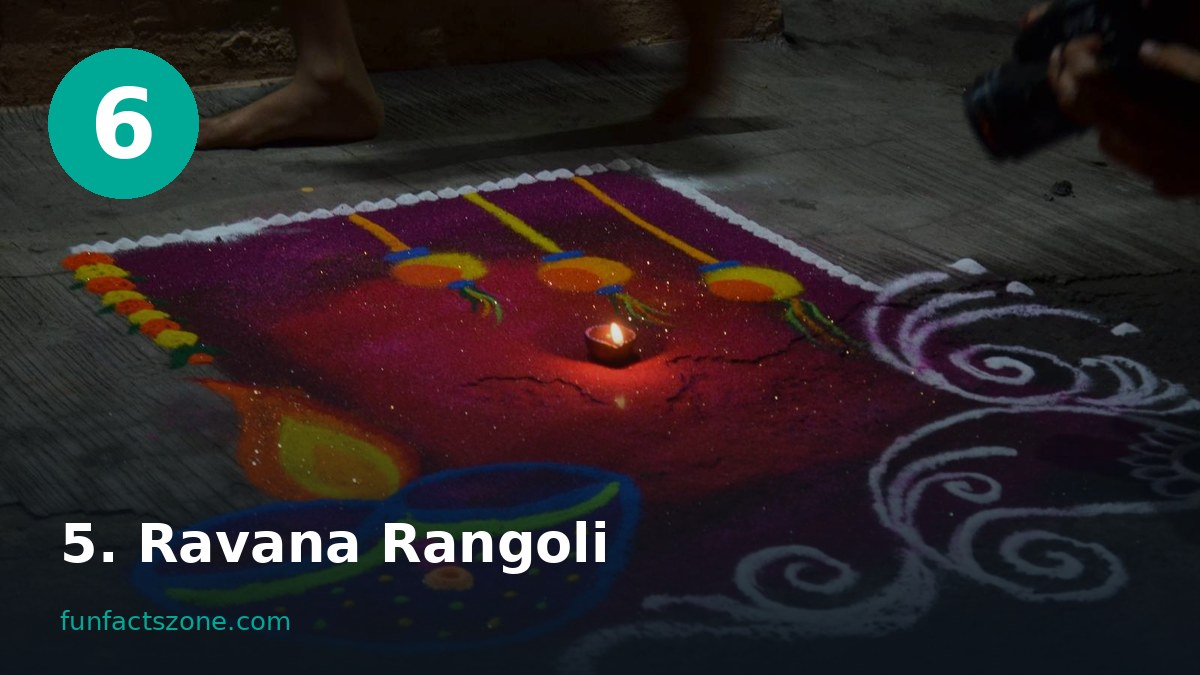
Kids love this one. Draw ten small circles in a row for Ravana’s heads, each with a crown on top. Keep the faces simple — two dots and a moustache. Write “Happy Dussehra” below in white.
6. Kolam and Dot Rangoli
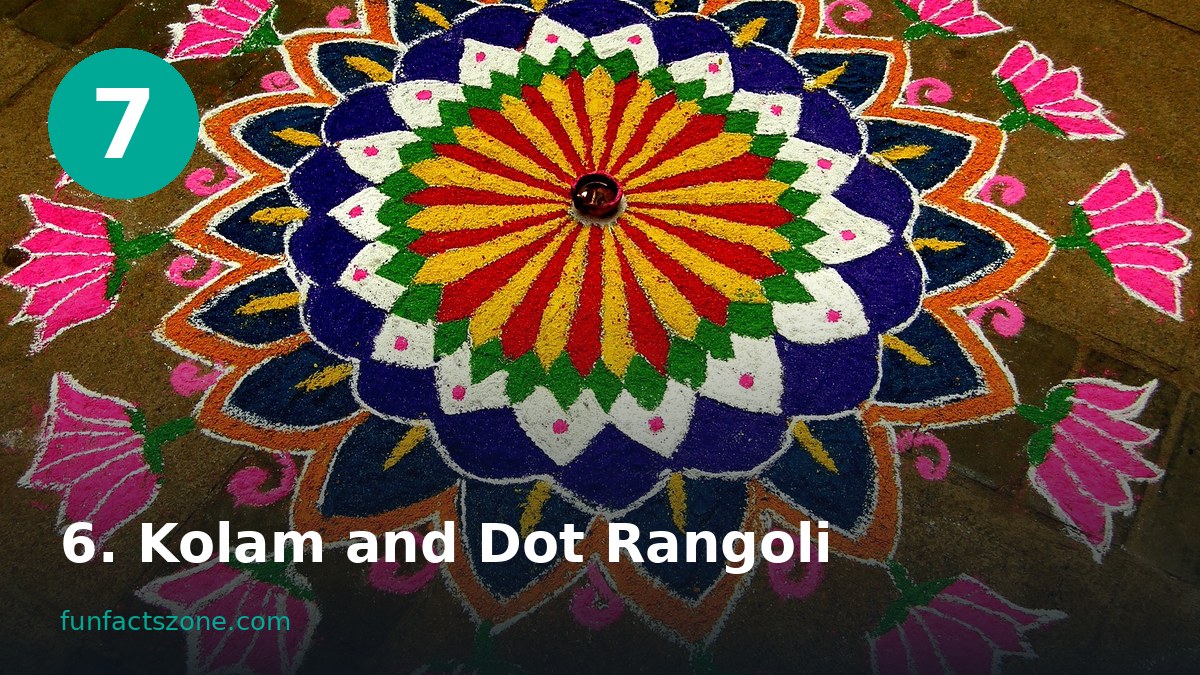
In Tamil Nadu and the south, doorsteps get a kolam, drawn with rice flour around a grid of dots. Start with a 5×5 grid, loop lines around the dots, and fill a few spaces with colour for the festival.
Rangoli Tips for Beginners
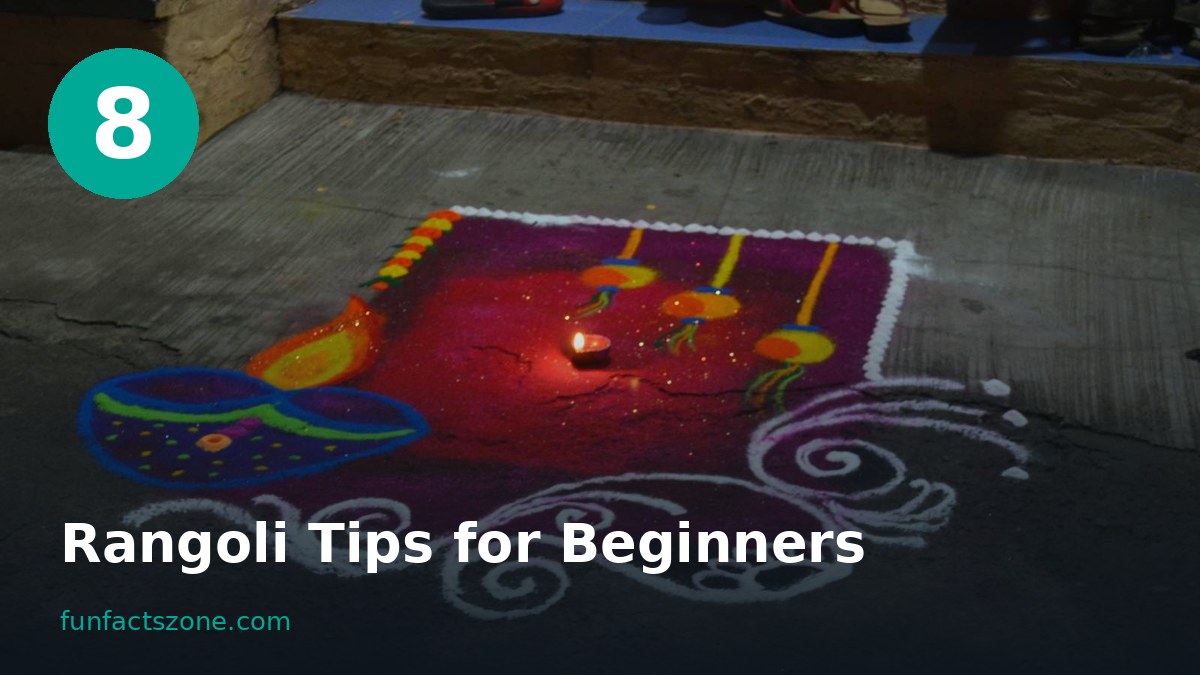
Outline first, colour later. Chalk mistakes wipe off; powder mistakes don’t.
Work from the centre out so you don’t smudge finished parts.
Pinch, don’t pour. Hold the powder between thumb and first finger and let it fall slowly.
Use a funnel or a paper cone for thin, even lines.
Keep it small the first time. A neat 2-foot rangoli looks better than a messy big one.
Frequently Asked Questions
What rangoli should I make for Dussehra?
A bow and arrow rangoli is the most Dussehra-specific design. Diya, flower and peacock rangolis also suit the festival.
What colours are used for Dussehra rangoli?
Red, orange, yellow, green and white are the most popular, with marigolds and diyas added for the finish.
How can I make a rangoli without powder?
Use flower petals, coloured rice, or coloured salt. Flower rangolis are the easiest to make and to clean.
Photos via Wikimedia Commons: 1 Kamala L (CC BY-SA 2.0); 2 Shreya Dwivedi (CC BY-SA 4.0); 3 RashmiGhorpade (CC0); 4 Alokjain19883105 (CC BY-SA 4.0); 5 Rachana3111 (CC BY-SA 4.0); 6 Le Priyavrat (CC BY-SA 4.0); 7 Balaji.B (CC BY 2.0); 8 Le Priyavrat (CC BY-SA 4.0); 9 Abhijit S. Rehpade (CC BY-SA 4.0).